Expert meeting
How underfunding local organisations' overheads undermines humanitarian action
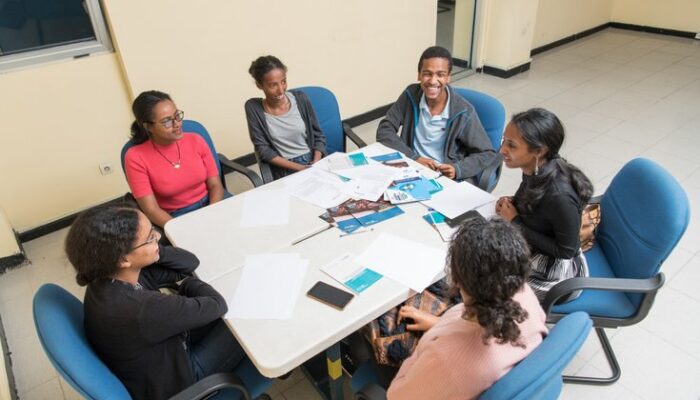
Maheder Haileselassie Tadese/Getty Images/Images of Empowerment
Local and national humanitarian actors (LNAs) are often the first and last responders during a crisis, yet they continue to operate within a system that systematically underfunds their safety, organisational health and sustainability. In recognition of this chronic underfunding, international humanitarian actors came together in 2016 to collectively and publicly commit to ensuring LNAs are better resourced. Increasing the quantity and quality of funding for overheads (also known as indirect cost recovery (ICR)) for LNAs is central to this broader commitment.
Humanitarian Policy Group worked with Oxfam and the Humanitarian System Transformation through Local Humanitarian Leadership (HST-LHL) consortium and monitored the progress of overheads to local and national actors. Please find their latest research report here.
Overheads are not peripheral administrative costs. They fund the essential infrastructure that enables principled humanitarian action: programme quality and continuity between grants, staff retention, duty of care, safety and security, compliance, coordination, and the organisational resilience required to respond rapidly and responsibly. As Maliha Fairooz from the Feminist Humanitarian Network notes, ‘Overheads are part of the heartbeat of feminist humanitarian organising… This is not extra. This is the work.’
The speaker will present some of the key findings and issues from the HPG research, followed by an interactive discussion.
- Nora Hassanien, Research Associate, Humanitarian Policy Group at ODI Global
Please register using this form.
The Humanitarian System Transformation through Local Humanitarian Leadership (HST-LHL) programme is implemented in partnership with the Netherlands Ministry of Foreign Affairs (NLMFA).
The multi-country programme runs from April 2024 to December 2027 and aims to contribute to a humanitarian system that is truly locally-led. Through learning, coordination and innovation in 7 programme countries (Colombia, DRC, Kenya, South Sudan, Yemen, Myanmar and Indonesia), research and recommendations will be shared widely through the programme to inform and influence concrete policy and practice changes by all relevant stakeholders across the humanitarian delivery chain, including donors, UN agencies and local and international NGOs. Knowledge will be shared globally, through research and (learning and influencing) events, with the support of ODI Global, as well as with KUNO for a specific focus on the Netherlands and Dutch-based humanitarian actors.
A team at the think tank ODI Global, HPG is one of the world’s leading teams working on humanitarian issues. They are dedicated to improving humanitarian policy and practice through a combination of high-quality analysis, dialogue and debate. HPG is also part of the Oxfam Novib Humanitarian System Transformation through Local Humanitarian Leadership programme (HST-LHL).