Masterclass
Anticipating and responding to disasters
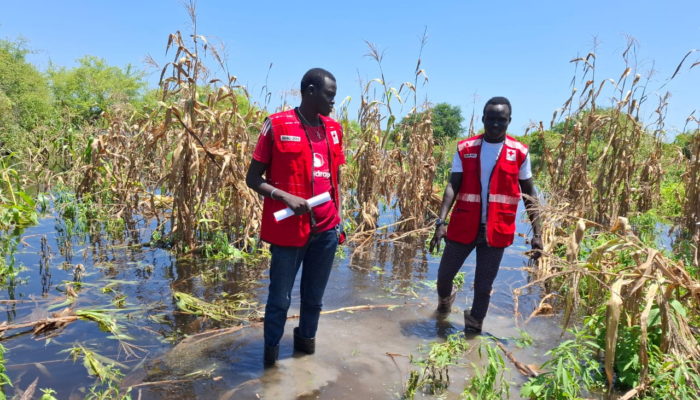
Kenya Red Cross Anticipatory Action Floods simulation- Floods Marker
This masterclass aims to raise awareness and build knowledge of anticipatory action. The event seeks to facilitate critical reflection and explore the limitations of anticipatory action. Through interactive sessions, participants will acquire a deeper, hands-on understanding of the practice and theory of anticipatory action. The masterclass is designed for a mixed audience of humanitarian practitioners, policy makers, academics and students.
This event is a follow-up event to the first Masterclass that was organised last year (report and more information). Please find more information and the report here.
Anticipatory action refers to actions taken to reduce the humanitarian impacts of a forecast hazard before it occurs, or before its most acute impacts are felt. The decision to act is based on a forecast, or collective risk analysis, of when, where and how the event will unfold (IFRC 2020). It is a type of preemptive intervention informed by early warnings; for example, distributing cash transfers to farmers ahead of a predicted drought. It has been used to reduce the impacts of crises by triggering early actions before disasters strike. It is used as an extension of humanitarian aid.
Anticipatory action is gaining increasing attention, also within the humanitarian field, and sees a rise in funding, for example, in the Netherlands and Germany. Anticipatory action started with small pilots in 2016. Since then, over 154 active frameworks have been developed in 48 countries, with at least 285 UN/Red Cross and NGOs involved and several donors.
- 13:00 – 13:30: Plenary opening on anticipatory action (overall process and technical tools), placed in the current context with more people in need, an increased need for prioritisation and a changing funding landscape
- Marc van Homberg, Professor Data4Disaster Resilience (UT/ITC) and Scientific Lead at The Netherlands Red Cross’ data and digital team
- Eefje Hendriks, Assistant Professor of Disaster Resilience and Humanitarian Assistance, University of Twente
- 13:30 – 14:15: Humanitarian NGO pitches on their Anticipatory Action work, followed by a plenairy exhchange
- Minet Aguisanda, Executive Director, Leyte Centre for Development (LCDe)
- Sarah Haller, Programme Manager and Anticipatory Action Advisor, CARE Netherlands
- Talia Meeuwissen, Climate Resilience Advisor, ZOA
- 14:45 – 16:00: Breakout groups guided by experts to work towards resolving certain challenges in anticipatory action response (please see the list of workshops below)
- 16:00 – 16:45: Panel conversation
- 16:45: Drinks and networking.
Workshop 1 [topic tbc]. Led by:
- Rein Lommerse, PhD Candidate in Operations Research, Zero Hunger Lab, Tilburg University and Netherlands Red Cross
- Janne de Rooij, PhD Candidate in Operations Research, Zero Hunger Lab, Tilburg University and ZOA
Workshop 2: Financing multi-hazard housing resistance through anticipatory action in the Philippines. Led by:
- Sophie Buijs, PhD candidate at the Water and Climate Risk Department, Vrije Universiteit Amsterdam
- Aashi Sethi, Research Assistant, Wageningen University
Workshop 3: Mapping the end-to-end value chain of Anticipatory Action in policymaking in Nepal. Led by:
- Sahara Sedhain, PhD Candidate, University of Twente/ITC and The Netherlands Red Cross
- Lakshman Srikanth, Advisor in the Safe and Resilient Infrastructure (SRI) Department, Deltarus
Workshop 4: Scaling anticipatory action from pilots to institutionalisation within broader disaster risk management policy and social protection systems. Led by:
- Angelina Heil, researcher, UCD Centre for Humanitarian Action Lárionad um Ghníomh Daonnúil UCD
- Marlon Krippendorf, Research Assistant, ISDC
Workshop 5 [topic tbc]. Led by:
- Anne Schauss, Geospatial Data Scientist, Heidelberg Institute for Geoinformation Technology, Heidelberg University
- Diego Pajarito Grajales, Research Associate in Urban Studies & Social Policy at the Urban Big Data Centre (UBDC), University of Glasgow
Please register through this form.
– Picture: Kenyan Red Cross –