
Delivering aid in a country at war: Tetiana’s story from Ukraine
We often spend our nights listening to explosions, waiting for messages, and checking whether everyone is still alive.
The war has continued for several years, but the humanitarian crisis is massive. But it is not easy to explain the reality of war. I will try to do so by telling you what happened in the first week of September, the week in which we had this conversation.
During the night of 8 September, Russia launched a large missile and drone attack on Kyiv, in which at least five people were killed and 35 were injured. Residential buildings, a school, a clinic, warehouses and other civilian facilities were damaged, and large fires filled parts of the city with smoke.
On the same day, a Russian drone struck a passenger train in another region. The passengers managed to evacuate, but a train conductor was killed.
For communities in Zaporizhzhia, Kherson, Donetsk, Sumy, Kharkiv and other frontline and border regions, these are not exceptional events. Shelling and drone attacks happen every day and continue to damage homes, hospitals, energy facilities, and water infrastructure.
People get injured in their homes, on their way to work, and while traveling by train. Energy workers repair power lines that may come under attack again. Utility workers restore water systems while shelling continues nearby. Humanitarian teams must constantly decide whether they can safely reach a community. An intervention that we completed several months ago can be damaged again by another attack.
This may all sound dramatic, but it shows something important about life in Ukraine today. People go to work, children attend school, organisations implement projects and communities try to rebuild. At the same time, everyone understands that the situation can change in a few minutes.
Tetiana wipes away the tears on her cheeks and continues talking.
Another challenge is that humanitarian workers are also living through the war. They worry about their families, experience electricity cuts and air raids, and still continue supporting other people.
It is not easy to explain the reality of war.
What does this mean for your work at Caritas Ukraine?
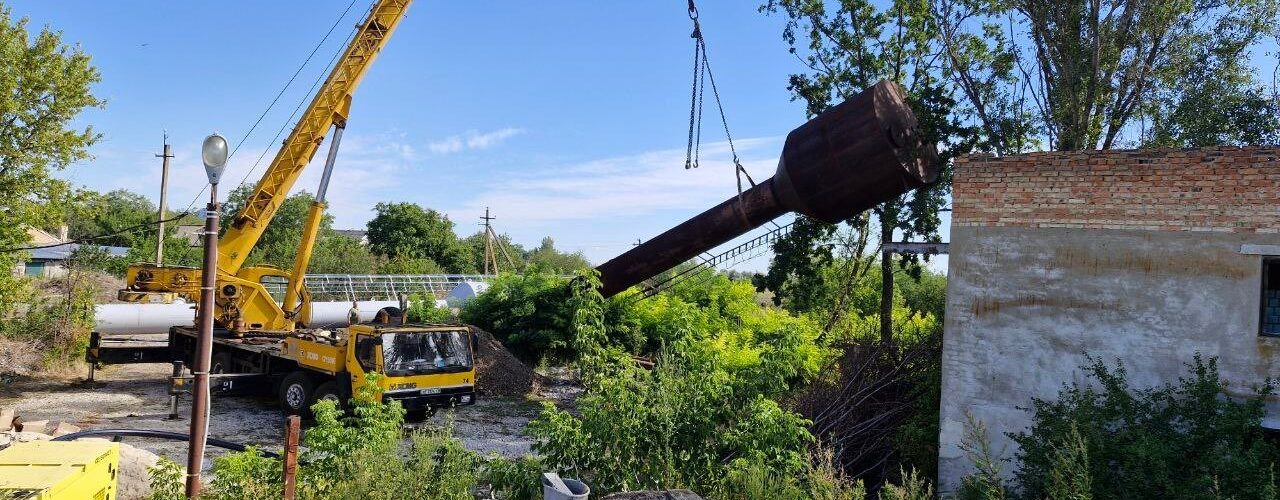
My work focuses on supporting war-affected communities to maintain or restore access to essential services. Besides restoring water supply systems and making clean drinking water accessible again, we distribute hygiene kits and vouchers for hygiene items.
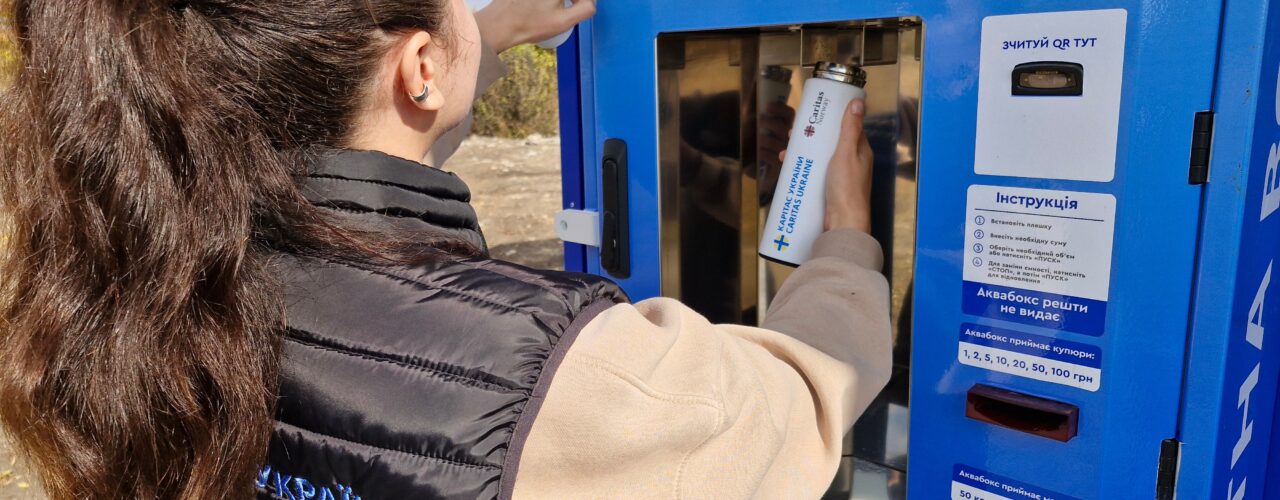
We try to repair what has been broken or damaged, but we are also transporting water into areas where people do not have access to clean drinking water. We also try to come up with alternative energy solutions for water providers, so that they can continue to deliver clean water in the area.
Water and energy systems in Ukraine are deeply interconnected. Electricity is essential for extracting, treating and pumping water, as well as for operating wastewater and sewerage systems. When energy facilities come under attack or are damaged by missile and drone strikes, the consequences can quickly extend far beyond the loss of electricity.
When Russia launches an attack on energy infrastructure, people may simultaneously lose access to all essential services: potable water, sanitation, heating and hot water.
For WASH projects, we must think beyond the immediate repair. Ukraine is facing environmental damage, water scarcity and climate-related risks. Therefore, rebuilding the same vulnerable systems is not enough. We need solutions that are safer, more energy-efficient, decentralised where appropriate and easier for communities to maintain.
What are the biggest challenges you are facing at the moment?
The biggest challenge is that we do not know when the war is going to end. It does not seem like it will end soon, and that is very heavy for many of us. I am worried about the mental wellbeing of many of my colleagues. Even though they do not want to stop and choose to continue working, I see how extremely difficult it is for them and their families.
Another challenge, as I mentioned before, is that the infrastructure is already repeatedly damaged, which makes providing humanitarian assistance to those in need extremely difficult. Also, needs can change overnight after an attack or a new wave of displacement. It can be difficult to reach frontline communities safely, and procurement and construction take longer under wartime conditions.
The war is damaging water resources in several interconnected ways. Missile and drone attacks damage water treatment plants, pumping stations, pipelines, wastewater systems, industrial facilitiesand energy infrastructure. When these systems are destroyed or lose electricity, untreated wastewater, fuel, chemicals, and other pollutants may enter rivers, groundwater and soil. This creates an immediate risk to public health and may also cause long-term environmental damage.
And last but not least: as you know, we are also facing reduced humanitarian funding while the needs remain enormous. This means making very difficult choices about which communities and facilities can be supported first.
How do you still reach people who are hard to reach?
We always try to find a solution to reach them without endangering our staff. The approach is always different and changes from day to day. Our teams work under air-raid alerts, security restrictionsand the constant risk of shelling. Sometimes we must postpone assessments or distributions, or change the location at very short notice.
We also have security staff who evaluate the situation daily, or hourly when needed. This is very helpful.
What makes you proud when you look at your colleagues and your work?
I am proud of everything they do. I am proud that they are trying to find a way to manage their work, even though it is extremely difficult. We share with each other how we feel, and we try to keep going and support each other to get through the year. My colleagues give me hope, for sure, even when the situation seems very hopeless. They are working under extraordinary pressure: they assess damaged infrastructure, communicate with communities, develop technical solutions and monitorprojects while facing the same air raids, power cuts and personal worries as everyone else.
I am also proud that we do not only look for the fastest temporary solution. We try to restore services in a sustainable way. A repaired borehole, filtration system or wastewater facility can serve thousands of people long after the project ends.
Most of all, I am proud that our local teams remain close to people. Behind every technical intervention, they see a community, a family and a person. And by doing so, they keep on finding the motivation to continue supporting them and helping the most vulnerable people.
Most of all, I am proud that our local teams remain close to people. Behind every technical intervention, they see a community, a family and a person. And by doing so, they keep on finding the motivation to continue supporting them and helping the most vulnerable people.
How is Caritas working together with Cordaid?
In the years since the start of the war with Russia in 2022, the situation has become very difficult. Millions of people were forced to leave their homes, and local services were no longer accessible. Many families arrived at evacuation centers, and some communities became isolated because of the destroyed infrastructure.
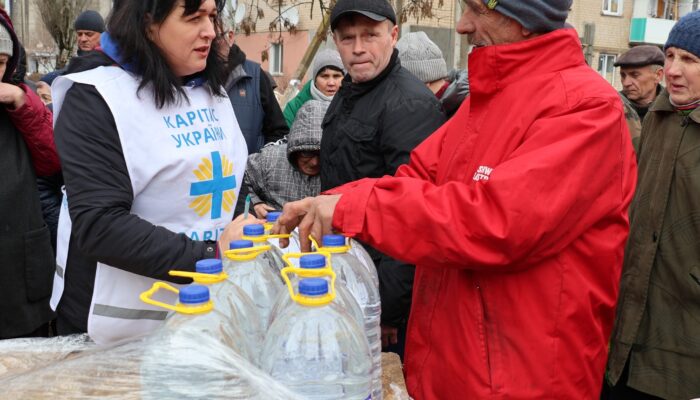
With Cordaid and other partners, we were able to set up emergency responses very quickly. We started distributing food and hygiene kits, as well as water. That response reached around 103,000 people across several regions.
We saw that distributions were not enough. People needed local services because healthcare facilities and other essential services were also affected. Cordaid was one of the first actors to support us in taking a more sustainable approach within the humanitarian response. We worked to restore water supply and filtration systems in 15 areas and helped improve hygiene facilities for vulnerable people. Over the years, we have helped 54,000 people with water services.
Last year, Cordaid supported our emergency response when evacuation intensified in the Zaporizhzhia region. Their support helped us assist people during evacuations and provide food kits at resilience points and other safe and warm places where displaced people could find shelter.
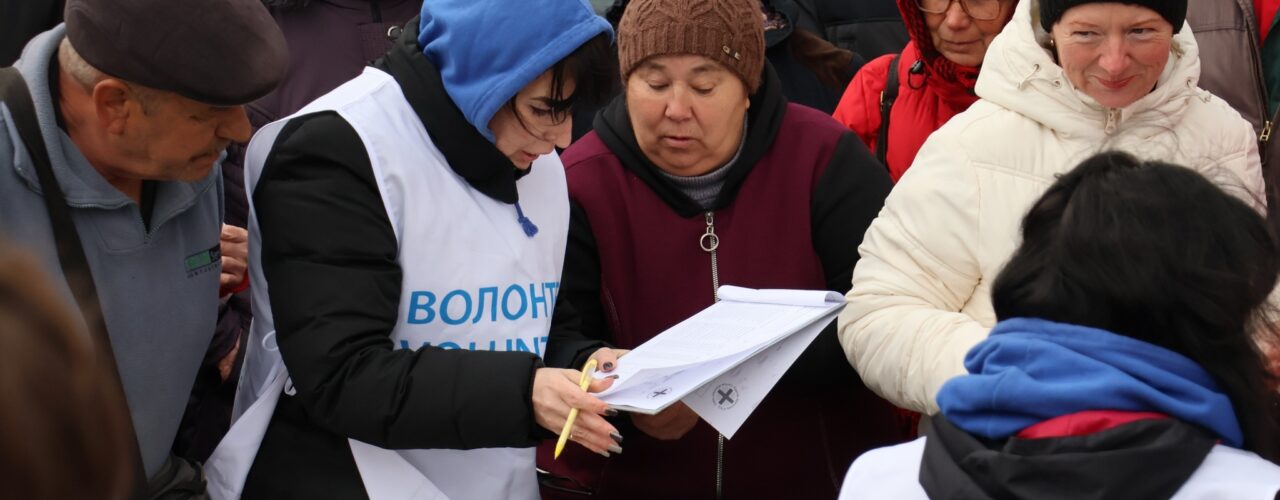
Cordaid also supported people returning from occupied territories. This was particularly important because people often returned with very limited resources and needed help to restore basic living conditions.
We are currently working on a new project in which we will provide portable power stations to vulnerable households, especially large families and families that include people with disabilities. In Kherson and communities located within approximately twenty kilometers of the frontline, vulnerable households will also receive cash assistance to help cover utility costs and in the Kyiv region, we are supporting warm winter kits for vulnerable households affected by electricity and heating disruptions.
At the same time, our partnership includes sustainable WASH solutions. With Cordaid’s support, we have restored wells and boreholes, installed water treatment systems and rehabilitated water and sanitation infrastructure in war-affected communities and social institutions. Two WASH projects alone improved access to water for more than 30,000 people in the Dnipropetrovsk, Kherson and Kharkiv regions.
Cordaid’s support is much broader than WASH. It has included healthcare, palliative care, assistance to people with disabilities, cash assistance, livelihoods, education, energy support and, currently, rehabilitation and psychological support for veterans and their families.
For us, this is not only financial support. It is a long-term partnership that allows us to respond to urgent needs while also helping people and communities become more resilient.
What would you like to share with people reading this interview?
I would like to end by saying that the situation in Ukraine is not normal. The fact that it is not appearing in the news anymore is strange. We are talking about the lives of innocent people, people who just want to live their lives in their own country. The situation is wrong and should not be like this. I believe that there should be more interest in what is going on on the ground, and I hope that more governments feel that they should protect humanitarians working on the ground, in these difficult circumstances.
As a humanitarian, I would like to say that our priority is to reach people in need, and that we should never, never be a target of violence.
We need the world to protect us and stand up for human rights.
Read more about the work of Cordaid in Ukraine here.
Date: 5 October 2026
Author: Marianne van Elst-Sijtsma