
Putting humanity before institutions - Anthony Neal
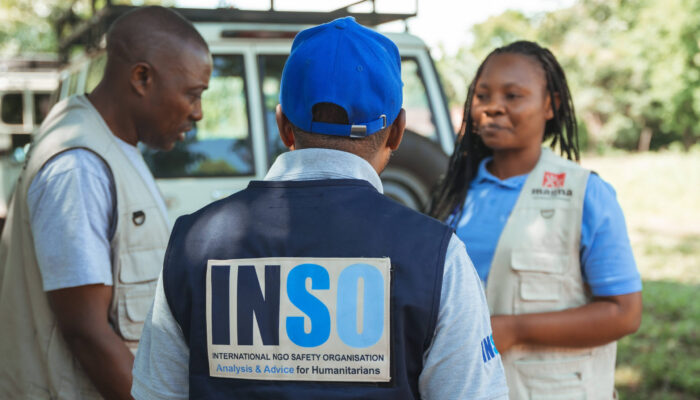
I am Anthony Neal, Director of Policy, Advocacy and Communication at INSO: International NGO Safety Organisation. INSO is an NGO for other NGOs. We are a humanitarian organisation that aims to support NGOs to safely deliver assistance and access those in need. We effectively collect and collate information and provide analysis and advice that enables them to make informed operational decisions about their own safety and security. We also support coordination between organisations and provide training and capacity strengthening to help NGOs manage their own risk. Finally, and this is the work that I do, we engage in advocacy. Not all of the risks that are faced by aid workers can be addressed by organisations themselves. That is why INSO also seeks to influence the UN General Assembly, the UN Security Council, member states and others, to address the systemic and emerging risks facing aid workers.
You have worked in very different humanitarian crises over the past decade. Looking across those contexts, what has fundamentally changed about what it means to operate safely as a humanitarian organisation?
I suppose it always depends on how far back you look. I started in the aid sector about 15 years ago. I think one of the key changes has been the risks caused by state actors. When I started, the main risk came from non-state armed groups. Now, what we have seen in the last few years is the significant increase in the threat to aid workers and organisations perpetrated by States.
Another key dynamic is the interaction between state and non-state authorities that impose competing access regimes on aid organisations. Increasingly I feel that NGOs are stuck between a rock and a hard place. In Sudan and Congo for example, there is multiple control by different authorities in the form of a recognised state authority and de facto authority. If you do something that is viewed positively by one side, it may be viewed negatively by the other. This creates risks for you operating on that side of the line and vice versa. In the end you are stuck in this dilemma of never really being able to address risk effectively or kind of always being on scrutiny in terms of your own neutrality.
The last thing is that we have less resources to manage these risks. Many of the access and security issues we face are not new. For instance at the height of the Syria crisis, as a sector we encountered competing and restrictive access regimes. However we had more resources, that allowed us to invest more in coordination structures. Right now it is hard to imagine the same level of international resources dedicated to supporting NGOs navigate a similarly complex crisis.
Do organisations know where to find you?
INSO is still a relatively young organisation, we were founded in Afghanistan in 2011. I think now we are much more part of the established architecture than we were five to ten years ago. We are now present in over 20 countries – most of which are high crisis countries and more than 50% of our partners are local and national NGOs at the global level. We are the only security service NGO that is accessible for local and international NGOs.
We did a study last year on the barriers for local and national NGOs accessing security coordination. Whilst we found that 2 out of 3 local and national NGOs were participating in NGO Security Coordination, there was an awareness gap. We’ve already started to address this, we recently started producing our first reports in Arabic in Syria and we’ve been increasingly engaging through National NGO Fora and Country Based Pooled Funds to extend our outreach to local and national NGOs. However, this is still primarily targeted at formally registered local organisations. Across the sector we’re increasingly recognising that a significant portion of assistance is delivered by informal local groups who may not be formally registered or participate in the formal aid system – and this is still somewhat of a gap. We spent the last 15 years integrating into formal architecture, and now we are faced with the challenge of how we can support this increasingly informal system.
We spent the last 15 years integrating into formal architecture, and now we are faced with the challenge of how we can support this increasingly informal system.
Besides this, what are other challenges that you are facing at the moment?
Securitisation of aid work itself, I would say. Humanitarian aid is increasingly interpreted by state and non-state actors through a security and geopolitical lens. That undermines the neutrality of the activities that NGOs are doing.
I feel the sector is experiencing a crisis of acceptance. The level of acceptance enjoyed by humanitarian organisations in the countries where we work is increasingly challenged. In 2026, the number of aid workers arrested will exceed the number of aid workers killed and injured. We’ve also witnessed a threefold increase in the number of NGO suspensions and serious restrictions imposed on aid organisations. Increasing securitisation and weakened multilateralism have significantly contributed to this trend. However, I also think we, as NGOs, have under-invested in our acceptance and have taken a passive rather than active approach to neutrality. To some extent, this is why our ability to stay and deliver is so important, as it is that proximity and solidarity with people in need that helps us build that acceptance and why we, as INSO, are committed to support organisations to do so. However, even our own work is increasingly scrutinised, restricted or criminalised. So, yes, I think how we address this crisis of acceptance is one of the most significant challenges facing the aid sector today.
What are your plans for the upcoming years?
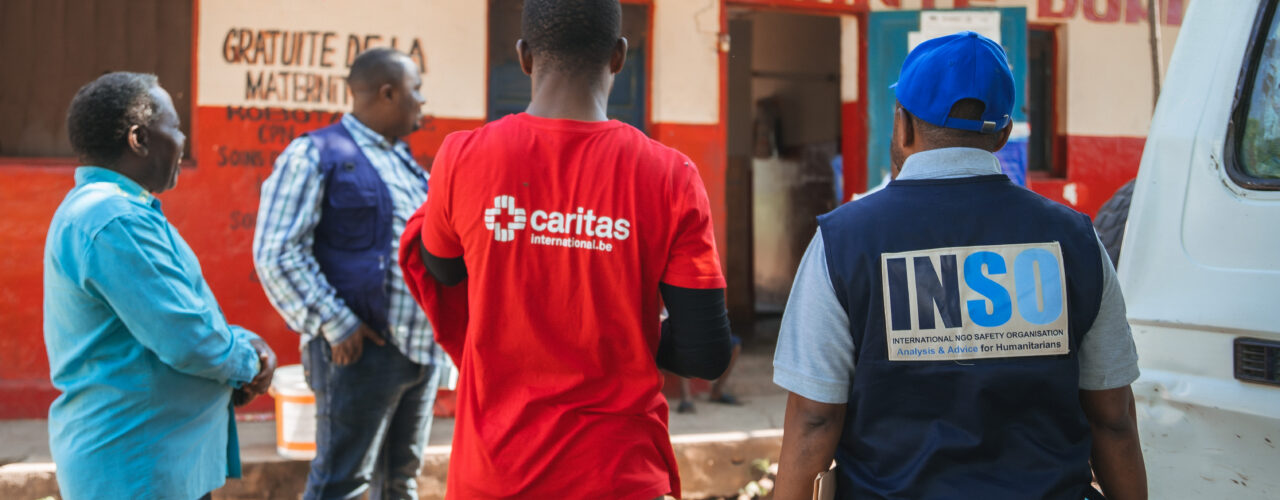
We are in the process of drafting our program strategy for the next four years and the challenge mentioned earlier is central to that. There is a recognition from our side that there is a need to increase our investment in getting acceptance from the governments and other stakeholders. We are going through a period where the normative foundations of aid are being undermined and in decline. Other issues in the geopolitical order are taking priority. We have to build acceptance in restrictive areas and have to reinvest in this. We also have to build acceptance in new places.
Also, increasingly we see harmful narratives about humanitarian action spread online. So how do we as a humanitairan community build acceptance within the digital space, with those we may never see, who may be far away from the communities we serve, but nevertheless influence our operational environment. Ultimately we have to become more agile. Besides that, we have to look at the fundamentals of aid again and reinvest in our core principles. Aid workers should have the ability to deliver aid safely. Therefore, we, at INSO, should be constantly asking ourselves ‘how will this support those directly delivering assistance’
How do you deal with governments that you would prefer not to work with?
I suppose we don’t have governments that we do not want to work with. From my point of view; as a humanitarian, you can’t have governments that you don’t want to work with. That is the baseline principle of neutrality. As an individual you’re entitled to your own opinions and political views, but as a humanitarian your goal is to engage with anyone you might need to, to ensure that those in need receive assistance and protection. What’s more challenging is when governments don’t want to work with us. This is where having the right negotiation skills becomes incredibly important as well as maintaining a transparent and consistent approach to engagement. However, I feel there is a significant dilemma for many humanitarians in cases where governments severely restrict aid. The risks of working outside the consent of governments is very high, resulting in detentions and attacks.
The humanitarian imperative motivates us to prevent and alleviate human suffering wherever it is found. In these situations, this burden is perhaps too often falling to volunteers and local organisations who are often least resourced to manage the risks they are exposed to.
Which developments in humanitarian access worry you most at the moment?
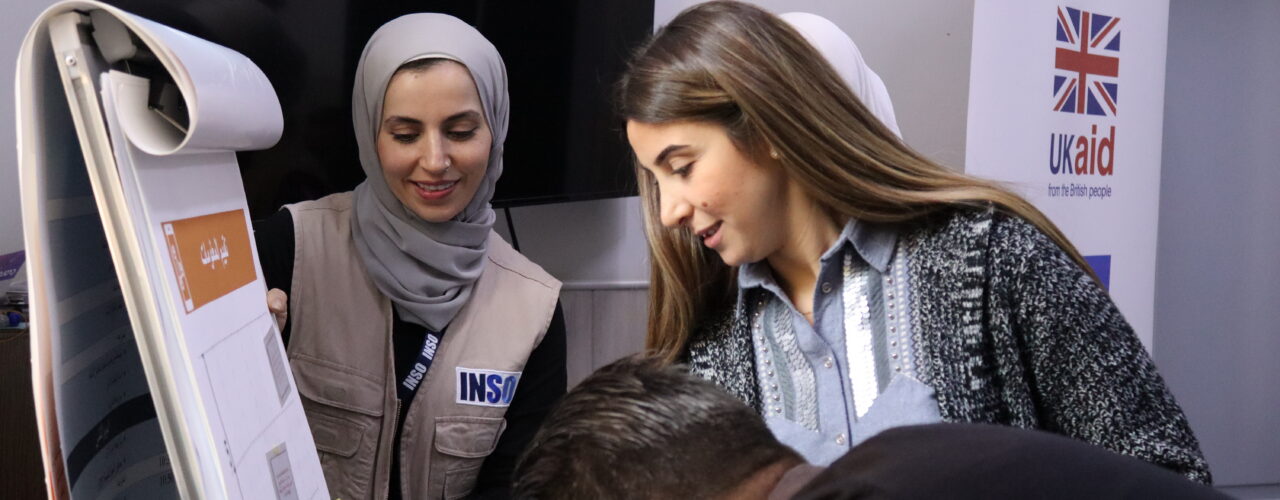
This comes back to the politicization of aid. I think what we see increasingly is detention risk and the criminalisation of humanitarian action. We are likely to see a decline in aid workers getting killed and injured in 2026 compared to 2025 (largely due to the change in conflict dynamics in Gaza), but the number of aid workers being arrested for aid activities has increased. These detentions represent the sharp end of a much wider continuum through which administrative, legal and political pressure becomes physical risk and the very foundations of our work are considered illegal.
If you could change one thing about how humanitarian organisations manage security, what would it be?
Whilst I think that there has been some benefit in the professionalisation of security functions within NGOs, I think that it’s also sometimes separated risk management from programming. Dedicated security management plays a crucial role within NGOs. Particularly in response to new risks, such as drones, there is a need to have dedicated resources to analyse the risk and outline appropriate mitigation measures. But we also need to ensure that there is a ‘whole of organisational‘ approach to risk management – starting with informed programmatic and operational decisions. This really involves ensuring that humanitarian leadership at all levels is empowered to make difficult and critical decisions, and ultimately take informed risks, that will enable us to uphold our humanitarian imperative. So, in sum, more empowered leadership closest to the communities we aim to serve.
Humanity is the driving force behind what we do. Let us use whatever tools are available to ensure that assistance reaches those who need it most.
What are your hopes and fears?
My fear is that in an age of decreased funding we will continue to prioritise our own organisational sustainability over our humanitarian imperative. Based on the current geopolitical trends, I think that humanitarian action will only become more complex in the years to come. My fear is without strong and principled leadership, we become part of an increasingly politicised system.
My hope would be that the increasing reliance on volunteer organisations effectively strips back the aid system to a point where we revert to our more activist roots. I hope that we regain the founding principles of our organisations. I think that we have far more to learn from the likes of the Emergency Response Rooms in Sudan than we maybe acknowledge and I hope that we learn to adapt to these models of mutual aid rather than coopting them into our system.
Humanity is the driving force behind what we do. Let us use whatever tools are available to ensure that assistance reaches those who need it most.
And last but not least, I hope that it becomes less about individual organisational priorities and sustainability, and more about collectively solving complex problems in different humanitarian crises. The first question should be: how are we going to use the comparative advantages we have, not only our sector, but the diverse ecosystem of actors around and within crisis-affected communities to address those problems? And the following question is then: how do we ensure that crisis-affected people will receive the assistance and protection they require when they need it most.
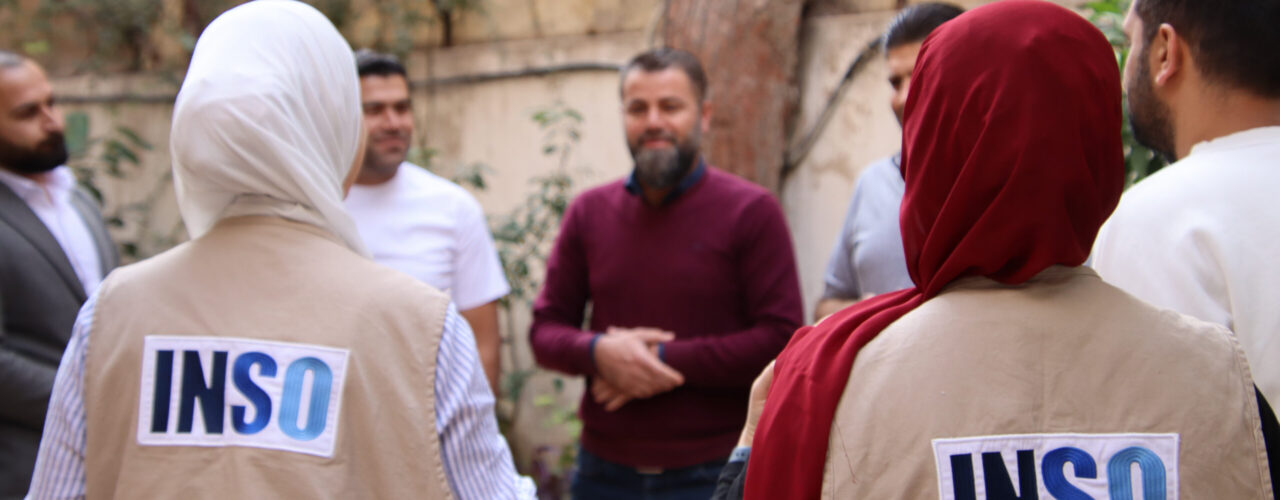
Read more about the work that INSO does here.
Author: Marianne van Elst – Sijtsma
Date: 25 November 2026