
Tineke Strik on Europe’s hardening asylum and migration policies
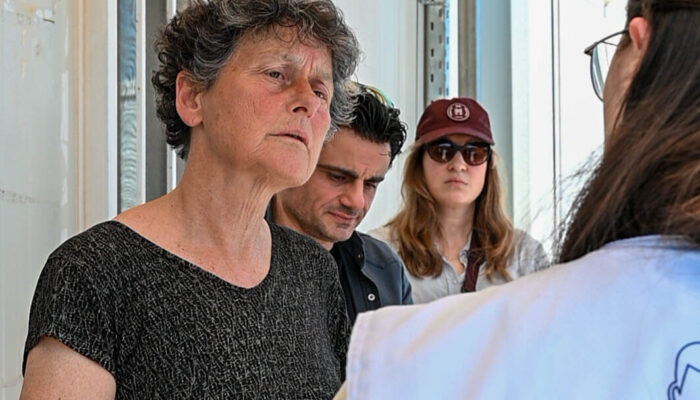
Watch this reflection by Tineke Strik and read the interview below
Tineke Strik reflects on the EU Asylum Pact and its impact on asylum seekers and EU member states. She examines the controversial crisis regulation, questions whether the pact offers real solutions, and discusses alternatives.
As some countries consider returning people to Syria and Afghanistan or sending them to offshore return hubs, Strik warns of risks to human rights and legal protections. What do these developments mean for people seeking safety, the future of EU asylum policy, and our responsibility to respond?
How is it for you to work in an environment that seems to ‘harden’?
Of course, that trend is very discouraging, and it makes me sad and frustrated as well. The Return Regulation was adopted, which is a horrible, dehumanising regulation, only with the support of the far right and the Christian Democrats. We, the liberals and social democrats, were all excluded from the negotiations. When it was adopted, members of the far-right parties in the European Parliament stood up and started chanting, “Send them back,” for several minutes. I don’t know if you have seen it, but I had to cry. Normally, I discipline myself and channel my anger into something more useful, but at that moment I thought: “How can I cope with this? What am I still doing here?”
What keeps me going is that we still have allies within the Parliament, and we are cooperating more closely with each other, also outside Parliament. We come together, invite NGOs to share their experiences and concerns, and carry out field visits together. This is becoming increasingly important, especially for NGO workers and lawyers who are trying to support and inform asylum seekers. They are under enormous pressure. They have to do the work on the ground with a declining number of staff members. For instance, the legal team of the Greek Refugee Council had to reduce its staff from 20 to just 5 because of cuts in the subsidy from UNHCR, which is suffering enormous cuts itself, while the problems and the need for legal aid continue to grow. During our visit, they wanted to meet with us and talk about what they are witnessing and the work they are doing on the ground.
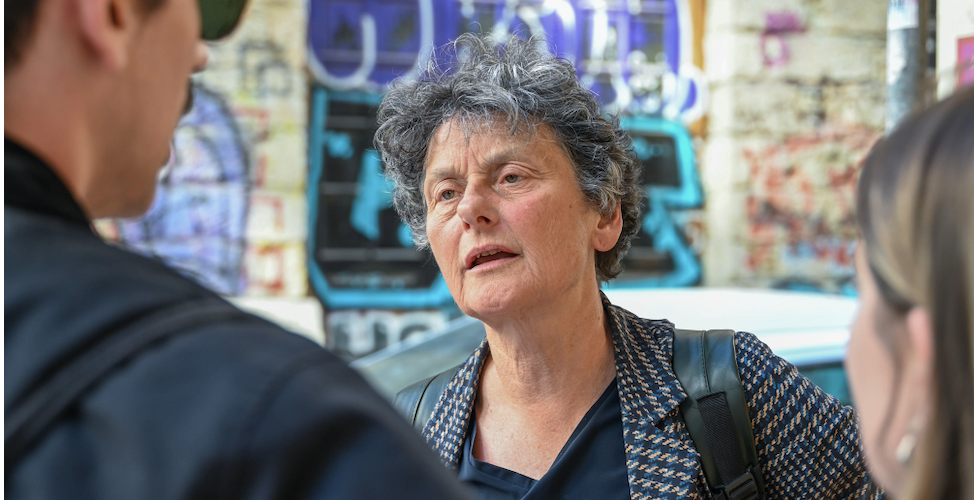
I am aware that these visits and conversations do not lead to immediate results. But if there were no one left to speak out against violations, it would become even easier to commit them. So yes, it is discouraging to see the environment becoming increasingly hostile, but our presence and our voice have become more necessary than ever.
What keeps me going is that we still have allies within the Parliament, and we are cooperating more closely with each other, also outside Parliament.
What did you see and hear during your recent visits to the refugee camps in Greece?
In all the conversations I had, the persistent and widespread reports of pushbacks across the region stood out.
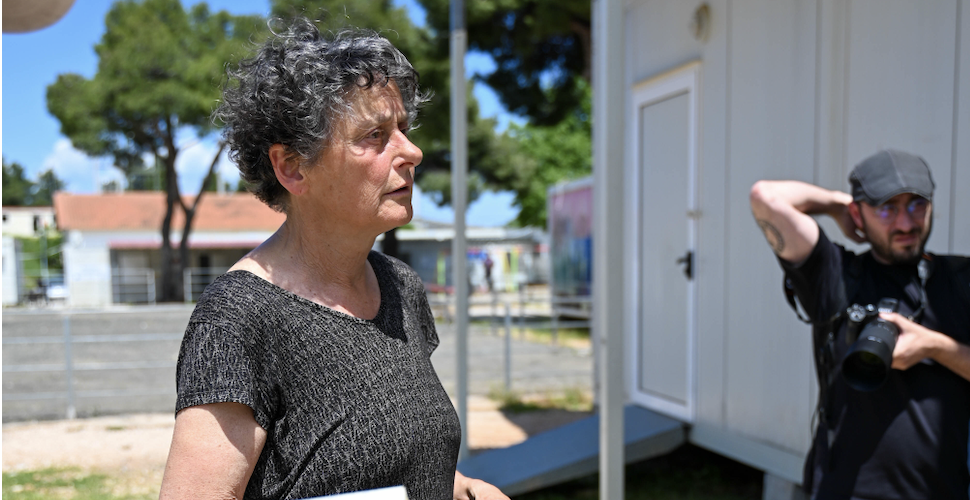
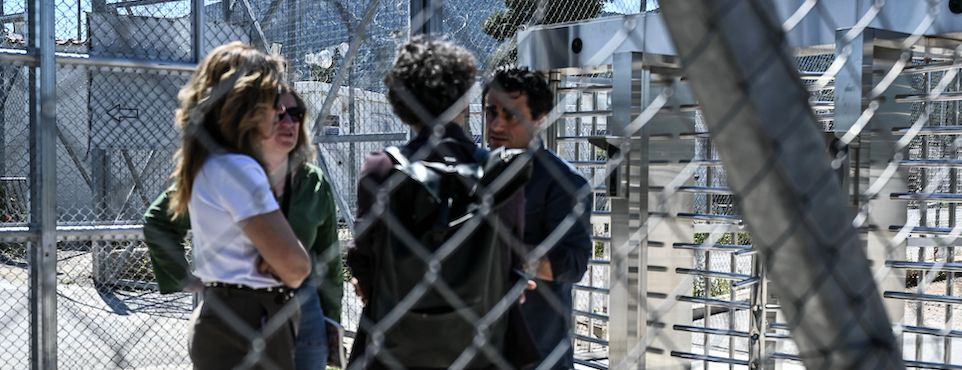
I have been visiting Greece since 2011. Back then, there were no reception facilities, and people were placed in detention immediately after their arrival. In 2015–2016, reception centres were built, and since then the camps have become increasingly securitised. Walls and fences have been erected around the camps, making what happens inside less visible.
Samos is a good example of this. The previous camp was built close to the village, so local people would regularly see refugees in the Greek community. Now, the camp has been built in a remote area, making it difficult for people to reach the village. It feels like a detention centre, and the government appears determined to keep the asylum seeker community separated from Greek society.
Irregular stay is currently being criminalised. Migrants who arrive but do not report to the reception centre immediately are placed in detention, where they have to wait until their criminal proceedings are completed before they can apply for asylum, without access to legal aid. They face sentences of up to two years’ imprisonment.
Humanitarian workers are also increasingly being criminalised. They have to carefully consider whether to help people because they fear facing criminal charges or losing access to refugees.
Apart from the criminalization, NGO’s are increasingly facing difficulties to support asylum seekers, even despite Greece is lacking sufficient capacity to offer sufficient services. Doctors Without Borders has been expelled from the centre. This leaves only two parttime “doctors” available in the camp: one is a pathologist and the other a microbiologist. There is clearly a lack of the services that the Greek government should be providing.
This lacking capacity will immediately undermine the proposed border procedures, which implies apush to speed up the process. According to judges in Greece, the proposed timelines are simply not feasible due to a lack of sufficient judges and lawyers. I think we will see overcrowded centres, with many people unable to leave and increasing numbers of people being criminalised.
Another problem that already exists is that people who are granted protection receive little or no support. They are not allowed to work because they need a social security number, which they are unable to obtain, and they do not receive housing. As a result, these people will continue travelling in order to be able to built a future. To be honest, I do not see this situation changing anytime soon. That will also mean that asylum seekers or refugees who travel onward because of insufficient protection in Greece, cannot be send back as the EU standards are not in place.
To be honest, I do not see this situation changing anytime soon. That will also mean that asylum seekers or refugees who travel onward because of insufficient protection in Greece, cannot be send back as the EU standards are not in place.
Are refugees in Greece already living in the Closed Controlled Access Centers?
The centres already have a detention section for people whose asylum applications have been rejected. They are not allowed to leave the fenced-off area within the camp, nor are they allowed to leave the camp itself. We heard that people in the detention section are treated very badly..
Those who are allowed to leave the camp often have to report twice a day, which means they have only a very limited amount of time to go anywhere or do anything.
What is the consequence of the fact that NGOs are forced to leave the camps?
This has many consequences. As I said, the Greek authorities leave many gaps because they either cannot or do not want to provide what is needed. NGOs have been filling these gaps, while also acting as watchdogs over what is happening in the camps. When NGOs leave, there are fewer people that refugees can rely on, including for medical and legal assistance. It also means that we lose critical voices that can advocate for better protection of rights and improvements to the situation. What we are seeing now is that the government is increasingly working with the IOM. They are even carrying out certain medical tasks, even though this is an organisation with a purely executive mandate, mainly focusing on voluntary return. But clearly the Greek government prefers such ‘neutral organisations’ in order to leave out the skillful but also critical ones.
NGOs have to register in order to be allowed to work on the ground. The requirements they must meet are often arbitrary, and if a staff member or volunteer does anything to assist someone who is staying irregularly, the organisationrisks losing its registration or being denied access. This makes it almost impossible for NGOs to do their work, leaving migrants without the help they so urgently need.
What is your vision on the return policy of Syrian refugees?
The rhetoric from several governments in Europe is that it is now safe to return. They argue that there is no longer a need for protection. As a result, more Syrians are seeing their asylum applications rejected or even losing their residence permits. But the benchmarks for sustainable return, which the EU is bound by, are not met at all.
The UNHCR’s and the EU’s position is therefore that only voluntary returns are allowed. Governments are encouraging people to return voluntarily and even offering assistance to do so. But you can question how voluntarily this really is if you take away all their prospects in the countries where they are currently living. In Germany, they organised a “go and see” programme, allowing Syrians to return temporarily to assess the situation without losing their residence rights in Germany. Many people saw that there was no real perspective there and decided to return to Germany. Of course, Syrians themselves know whether they have a future there: whether their children can go to school, whether there is adequate healthcare, and whether they have a chance of finding a job.
We are really blurring the line between forced and voluntary return. Forced return is not allowed, but is it truly voluntary if you take away people’s prospects where they are now?
This process creates immense insecurity among the Syrian population in Europe. You do not hear much about it, but it is a real drama for Syrian refugees here. There is a strong focus on integration, but if, at the same time, people constantly face the threat of losing their residence rights in Europe, integration simply will not work.
Let’s focus on the genuine rebuilding of Syria and see whether people living there can return to a normal life and regain access to essential services.
We should be the very last in line to expect people residing in the EU to return. And even then, you can still ask: why should they? Many have already lived here for years. Let them stay and become (and often remain) part of our societies.
We are really blurring the line between forced and voluntary return. Forced return is not allowed, but is it truly voluntary if you take away people’s prospects where they are now?
In an interview you said something about norms and values in our society, can you elaborate on that?
I think the most important thing is that we stop treating asylum seekers as hot potatoes that should be someone else’s responsibility, and stop treating them as a security risk. Politicians are using “security threats” as an excuse to take away their rights. This is a clear violation of the Refugee Convention, which we all committed to and are bound by.
It is deeply concerning that Member States are no longer obliged to provide access to an asylum procedure, and that outsourcing responsibility has become the preferred option. Under a recently adopted amendment, Member States are allowed to make agreements with any country that is “ready” to take over responsibility for our asylum seekers, even though we know that countries outside the EU are not bound by the same rules and standards that we are. By doing this, we are turning a blind eye to the consequences for the individuals concerned. The same applies to so-called return hubs, where we literally send people to another country instead of taking responsibility ourselves.
We should not leave this responsibility to the poorest countries; we should take our fair share. During a visit to Egypt, I criticised deportations from Egyptian territory to Sudan. Their response was: “Look at what you are doing yourselves. Do you want us to change while you are doing the same?”
We are losing the moral authority to ask others for solidarity when we fail to show it ourselves.
According to you, how does the ideal situation look like?
I think we need a good working system in the EU. I think people should be registered when they arrive at the external borders of Europe before deviding them across the 27 member states. In this way, you make sure that everyone has an obligation to give protection and integrate people ór reject them and return them quickly. Because right now, we make a mess of our own system. If you look at the Netherlands, it takes two years before people even get a first decision. This is not only bad for the asylum seekers, but we also undermine the importance of having a good system in place.
The narrative has increasingly been framed as if all refugees are coming to the Netherlands. That is neither fair nor true. Responsibility must be shared across Europe. The European Commission should ensure that all Member States comply with the agreed rules and regulations. Solidarity requires both trust and enforcement.
At the same time, the EU must also take responsibility at the global level. We should provide far greater support to the countries that host the largest numbers of refugees. That is why I would like to see the creation of a global refugee fund: a fund that provides financial support to countries carrying the greatest responsibility. This support should go beyond tents and emergency food aid. It should help people rebuild their lives by investing in education, healthcare, jobs, and opportunities for the future. But at the moment the opposite is happening: financial support to host regions has been heavily cut.
We can only expect countries to continue hosting large refugee populations if we support them in doing so. Too often, our focus is on funding border controls and tougher migration policies. Those measures alone will not solve the underlying challenge. At the same time, we can only credibly ask them to host refugees, if we take our share as well. According to UNHCR, approximately 10 percent of refugees living in camps are too vulnerable to stay there. It is up to more wealthy countries to offer them a safe and legal route to protection.
I know this is not a simple issue. But at its core, the message is straightforward: there are around 40 million refugees worldwide. Together, we should be able to ensure that they have the chance to live with dignity and build a future. That is only possible if we work together and share responsibility: within Europe and beyond.
About Tineke Strik
Tineke Strik is a Dutch politician, human rights advocate, and Member of the European Parliament for the Dutch GreenLeft party, where she sits with the Greens/European Free Alliance group. Since entering the European Parliament in 2019, she has focused on issues including migration, asylum, democracy, rule of law, and human rights. She is also a Professor of Citizenship and Migration Law at Radboud University.
Date: 19th of August 2026
Author: Marianne van Elst-Sijtsma