
Series 'The role of INGOs in a localised humanitarian system'
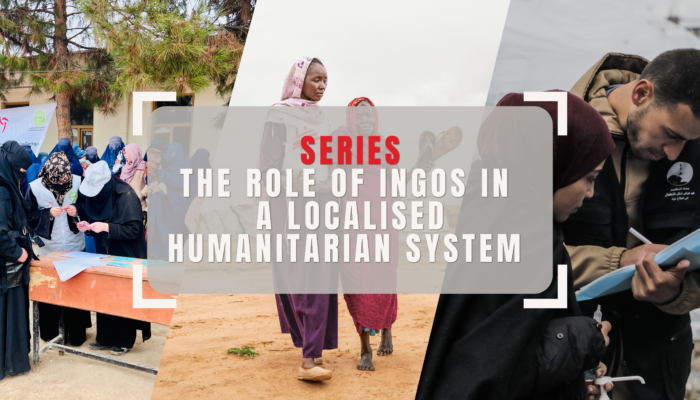
Still relevant or going extinct?
The perspectives on what could and should be the role(s) for INGOs in a shifted humanitarian system differ across organisations and perspectives. In this series, KUNO will bring together Dutch and local practitioners, policymakers, and academics to reflect on the difficult question: is there still space for INGOs in a future humanitarian system? Through interactive working sessions, these questions will be explored beyond verbal exchanges.
Humanitarian budgets are declining globally, whilst needs are increasing. The funding shocks of 2024 and 2025 have added pressure to this imbalance, which was already present. Some refer to this as a humanitarian disaster; others highlight the opportunity for a long-overdue overhaul of the system. This could finally lead to genuine localisation—not just in budget shares or project handovers, but in a real shift of power and responsibility.
A key question in this context is the role of INGOs in such a transformed system. Will they become relics of the past, remain in reduced or more service-oriented roles, or regain relevance by connecting with constituencies in donor countries? From that position, they could potentially influence narratives towards more supportive attitudes on humanitarian action. This perspective appears in several INGO strategies.
This series, The role of INGOs in a localised humanitarian system, will explore these questions and the perspectives of diverse humanitarian actors through presentations, conversations, and interactive activities. It aims to foster frank exchanges and address difficult dilemmas to advance the localisation agenda and examine its implications.
This series
Session 1
– Scenarios for humanitarian systems
Session 2
– INGOs and their constituencies in donor-countries- Session 3
– Futuring: what roles for INGOs are conceivable in a more localised system?
– Pictures: Cordaid, MSF, UNICEF –