About MFA and KUNO: Rolf Wijnstra on learning, change and humanitarian action
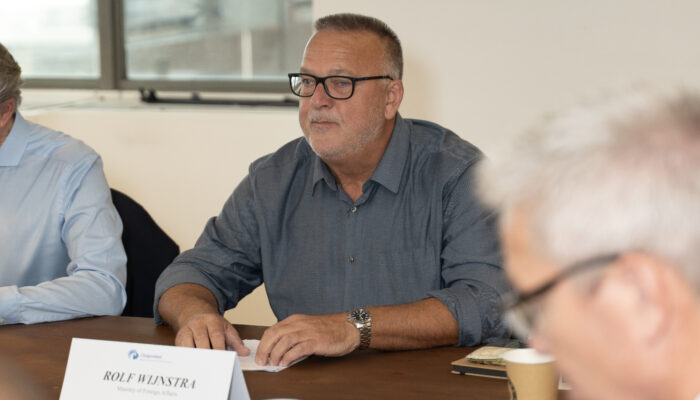
Can you tell something about yourself?
I have been working since 2019 at the MFA directorate DSH, which focuses on stability and humanitarian action. Before that, within DGIS (the development branch of MFA), I was adviser for policy and strategic communication, and from that role also an adviser for DSH. There, I saw how conflict, instability and their humanitarian impact were becoming increasingly prominent themes: both within development policy and in the broader foreign policy. The logical next step was to respond to a vacancy within the humanitarian team. And that is how I also became involved in KUNO.
Have you seen humanitarian work change?
Certainly. And let me first mention professionalisation and technical refinement. Consider the increasingly detailed mapping of global needs and improved coordination and logistics. Everything is aimed at reaching the most vulnerable groups. You also see this reflected in KUNO programming.
A downside is increasing bureaucratisation and technocracy: more themes are at play, there is more specialisation and the stakes are higher. This makes the work more complex and does not always contribute to decisiveness. For more than ten years, there has been discussion about better coordination, financing and more space and responsibility for national and local actors in the Global South. They rightly claim a role more often and are moreover essential for the implementation of international humanitarian assistance.
I find that inspiring because it forces reflection in a sometimes cumbersome sector with many actors, which likes to present itself as a neat “system”, but is in reality an ecosystem. It is constantly evolving and intersects with development, peacebuilding and politics.
The discussion about change was quite internally focused and progressed at a snail’s pace. But declining political and financial support accelerated the process. Actions by Trump and Musk, but also by other players, now force far‑reaching choices. Unfortunately, this often goes rather harshly and will not automatically turn out well for people in need, nor for humanitarian assistance based on humanitarian principles.
It is good to rethink what the concept of humanitarian actually means. We must also become much more aware of the political dimensions of humanitarian action: in crisis areas, at the global UN level and also here in the Netherlands. For a long time, the tendency was to view humanitarian work mainly as neutral, apolitical and by definition well‑intentioned. However, that mainly leads to self‑affirmation, limiting discussions about change to one’s own circle. But the context is changing, and we must relate to that. How to do so is both a challenge and an exciting opportunity.
It is good to rethink what the concept of humanitarian actually means.
Has the perspective of people in the ministry changed?
When people think of humanitarian action, they think first of NGOs. When they think of MFA, they mainly see us as a donor. That role is indeed essential, because it enables many aid organisations to do their work. But deliberate policy choices also underlie this: who and how we finance, and how we can work most impactfully on themes the Netherlands considers important. We therefore emphasise that we are a player and partner, not just a payer.
In addition, MFA is confronted with changes in Dutch politics. Investing in development has become less self‑evident and more emphasis has been placed on Dutch interests. This requires careful navigation and creative thinking, including about the core of our humanitarian policy.
For this, cooperation, dialogue and discussion with stakeholders are crucial. We do this in part through the Dutch Relief Alliance and the Red Cross, but also through KUNO. Of course, with partnership as a starting point. It is important that partners know and trust each other, but also that they can speak honestly to one another.
We therefore emphasise that we are a player and partner, not just a payer.
Are there things you found difficult in your role?
As an MFA civil servant, it sometimes felt difficult at first to sit at the table with seasoned emergency responders and humanitarian experts. I myself did not have field experience. But it soon became clear to me that my experience in policy and politics is our starting point. We do not stand with our feet in the operational mud, but we do stand in the policy clay. And that is also of great importance for humanitarian action. Partners and counterparts do not always have that clearly in mind, but what unites us is the humanitarian cause. We work on that from different perspectives.
What was your role at KUNO?
I was not involved from the very beginning, but I was involved in 2016 in the Dutch participation in the World Humanitarian Summit (WHS), from which KUNO emerged. In that period, a new emphasis was placed in development policy on learning, knowledge sharing and knowledge development. This also increased the involvement of implementing organisations, academia and policymakers. In many cases, this took shape through so‑called knowledge platforms. Strangely enough, such a platform did not exist for humanitarian action.
The WHS highlighted both the broader importance and the complexity of humanitarian action and thus the importance of deepening and reflection. A number of Dutch NGOs then took the initiative to establish KUNO. MFA co‑financed this and subsequently participated in the Steering Committee and in various activities.
Learning and reflection, discussion and dialogue are extremely relevant for the various stakeholders. You can also see this reflected in the growth of KUNO in terms of outreach and participation.
For us, the community is very valuable, precisely because non‑DRA members and educational institutions also participate. This gives us a look into the work of others, allows us to meet people and organisations with different insights and perspectives, and enables us to share knowledge and experiences. Because with assistance to people in need as a shared starting point, it is important to know each other, to question each other and to explore together how that can be done best and what each person’s own contribution and position in that is.
Which KUNO activities stand out for you?
KUNO continuously offers interesting activities that I recommend everyone in the humanitarian sector to follow. For example, last year’s meeting with Leiden University on mis‑ and disinformation gave me insight into an intriguing trend, linked to the politicisation I mentioned earlier.
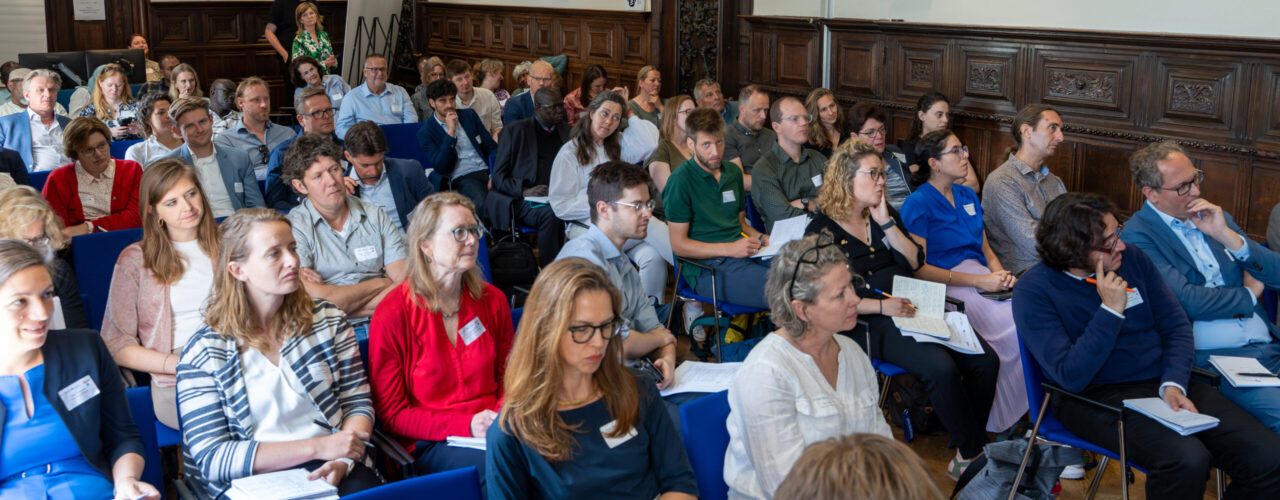
In addition, the now annual conference summarises the essence of KUNO: deepening, sharp discussion and perspective on the way forward. It is important that KUNO always includes the perspective of the affected people.
Date: 3 March 2026
Author: Marianne van Elst – Sijtsma